

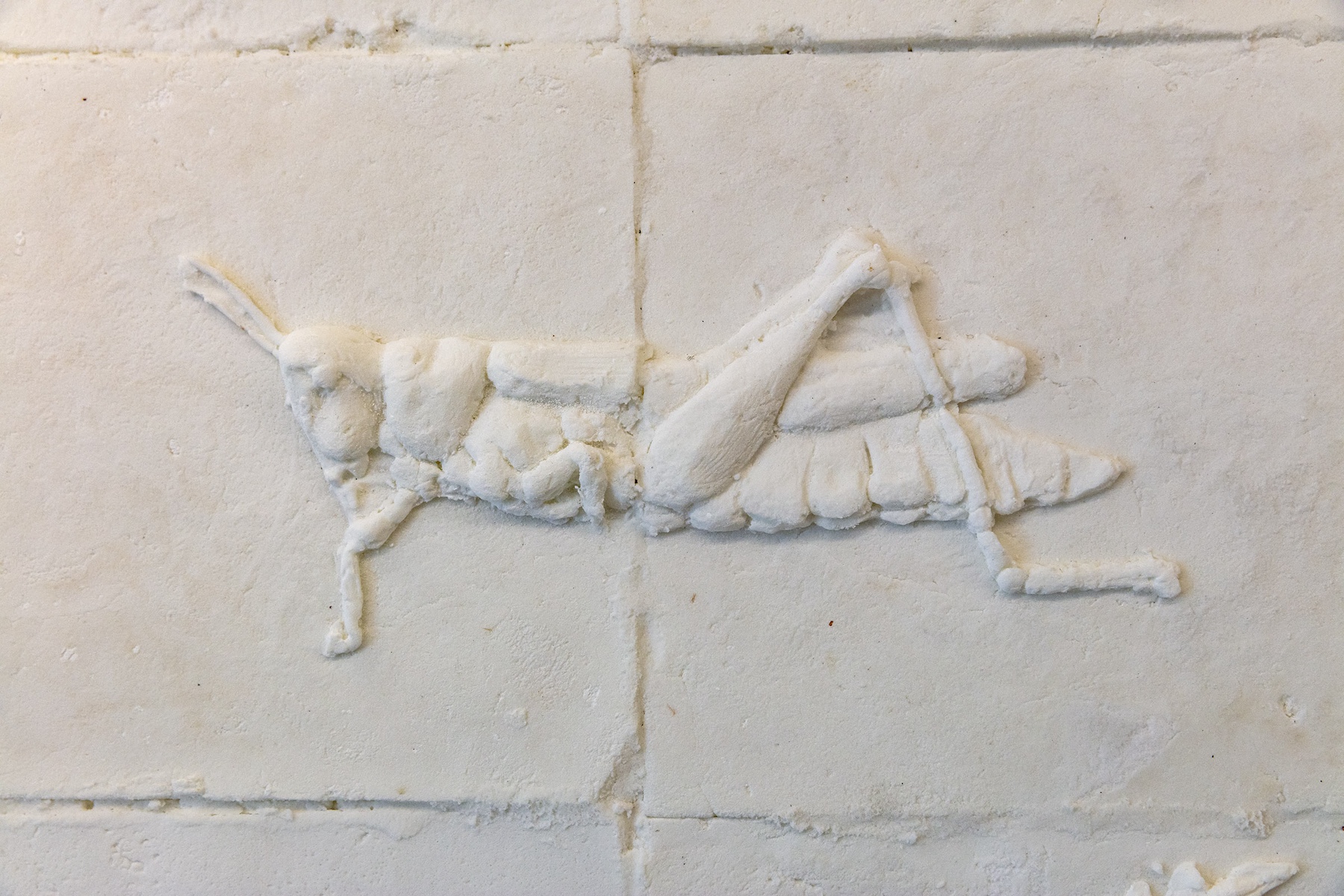
This text was submitted as a proposal to the apexart NYC26 Open Call
In today's food system, farmers serve the world's appetite, and in Egypt and North Africa, agricultural production fills plates far beyond its borders. At the heart of this exhibition lies a question: what forms of dependency and displacement are created when aid becomes investment, and cultivation becomes extraction?
Regional knowledge and native plant varieties often slip into obscurity due to climate stress, industrial agriculture, and agricultural colonialism. Farmers cultivate crops for export markets that promise economic growth, but at the expense of eroding local ecologies, sovereignty, and food traditions. High-yield seed programs and development initiatives, often framed as tools of progress, have over the decades generated a deep reliance on imported technologies, patented seeds, and volatile global markets. The result is an agricultural landscape increasingly governed by capitalist cycles of export, profit, and loss rather than ecological balance or local need.
Farmers and communities across Egypt have steadily lost sovereignty over land, seed, and diet. Regions once known for their self-sufficiency have given way to the cultivation of export crops, housing projects, and infrastructure that deplete soils and sever local supply chains. The exhibition brings into focus the fertile lands and their agricultural histories that persist in the present: which crops are grown, whose standards dictate them, who profits, and who eats. It asks what is lost when export-oriented monocultures replace diverse ecologies and food traditions? What forms of regeneration remain possible? And what does the future of our food and farm lands look like?
Through artworks and research practices that approach these entanglements from multiple perspectives and mediums, whether through food installations, or documentary film on the Nile floods preAswan Damn, wool tapestries, botanical illustration and specimen of crops native to modern day egypt, and food-based interventions and a comprehensive public program with a collaborative dinner inviting a New York-based chef to interpret the works through ingredients that trace these global routes.
While this exhibition is rooted in Egypt and North Africa, it speaks directly to New York, tracing the circuits through which ingredients, policies, and tastes travel. The aim is not to assign blame, but to examine the colonial continuities embedded in agricultural systems and the biopolitical implications of what we grow and consume. By bringing art, science, and gastronomy into dialogue, the exhibition calls for curiosity and critical awareness about the politics of what sustains us.
Audiences are invited to look, taste, and question. To consider how policies materialize on a plate. To imagine food sovereignty not as nostalgia, but as a practical framework for ecological and cultural survival. And to ask how art can help redesign our relationships with what we eat, and to engage with dignity towards our growers, care for the land, and intelligence in what we choose to cultivate and consume.
In today's food system, farmers serve the world's appetite, and in Egypt and North Africa, agricultural production fills plates far beyond its borders. At the heart of this exhibition lies a question: what forms of dependency and displacement are created when aid becomes investment, and cultivation becomes extraction?
Regional knowledge and native plant varieties often slip into obscurity due to climate stress, industrial agriculture, and agricultural colonialism. Farmers cultivate crops for export markets that promise economic growth, but at the expense of eroding local ecologies, sovereignty, and food traditions. High-yield seed programs and development initiatives, often framed as tools of progress, have over the decades generated a deep reliance on imported technologies, patented seeds, and volatile global markets. The result is an agricultural landscape increasingly governed by capitalist cycles of export, profit, and loss rather than ecological balance or local need.
Farmers and communities across Egypt have steadily lost sovereignty over land, seed, and diet. Regions once known for their self-sufficiency have given way to the cultivation of export crops, housing projects, and infrastructure that deplete soils and sever local supply chains. The exhibition brings into focus the fertile lands and their agricultural histories that persist in the present: which crops are grown, whose standards dictate them, who profits, and who eats. It asks what is lost when export-oriented monocultures replace diverse ecologies and food traditions? What forms of regeneration remain possible? And what does the future of our food and farm lands look like?
Through artworks and research practices that approach these entanglements from multiple perspectives and mediums, whether through food installations, or documentary film on the Nile floods preAswan Damn, wool tapestries, botanical illustration and specimen of crops native to modern day egypt, and food-based interventions and a comprehensive public program with a collaborative dinner inviting a New York-based chef to interpret the works through ingredients that trace these global routes.
While this exhibition is rooted in Egypt and North Africa, it speaks directly to New York, tracing the circuits through which ingredients, policies, and tastes travel. The aim is not to assign blame, but to examine the colonial continuities embedded in agricultural systems and the biopolitical implications of what we grow and consume. By bringing art, science, and gastronomy into dialogue, the exhibition calls for curiosity and critical awareness about the politics of what sustains us.
Audiences are invited to look, taste, and question. To consider how policies materialize on a plate. To imagine food sovereignty not as nostalgia, but as a practical framework for ecological and cultural survival. And to ask how art can help redesign our relationships with what we eat, and to engage with dignity towards our growers, care for the land, and intelligence in what we choose to cultivate and consume.
Marwa Benhalim is a Libyan-Egyptian artist and curator exploring food systems, agriculture, and culinary history through gender and economies; Founder / Director of ta3amana publishing, Switchboard Curatorial Studio and co-director of Cairo Art Book Fair.
apexart’s program supporters past and present include the National Endowment for the Arts, Milton and Sally Avery Arts Foundation, the Kettering Family Foundation, the Buhl Foundation, The Martin and Rebecca Eisenberg Foundation, Bloomberg Philanthropies, Spencer Brownstone, the Kenneth A. Cowin Foundation, Epstein Teicher Philanthropies, The Greenwich Collection Ltd., William Talbott Hillman Foundation/Affirmation Arts Fund, the Fifth Floor Foundation, The Puffin Foundation, the Trust for Mutual Understanding, The Andy Warhol Foundation for the Visual Arts, and public funds from the New York City Department of Cultural Affairs in partnership with the City Council, public funds from Creative Engagement, supported by the New York State Council on the Arts with the support of the Governor and administered by LMCC, funds from NYSCA Electronic Media/Film in Partnership with Wave Farm: Media Arts Assistance Fund, with the support of the Office of the Governor and the New York State Legislature, as well as the New York State Council on the Arts with the support of Governor Kathy Hochul and the New York State Legislature.