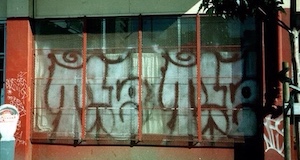

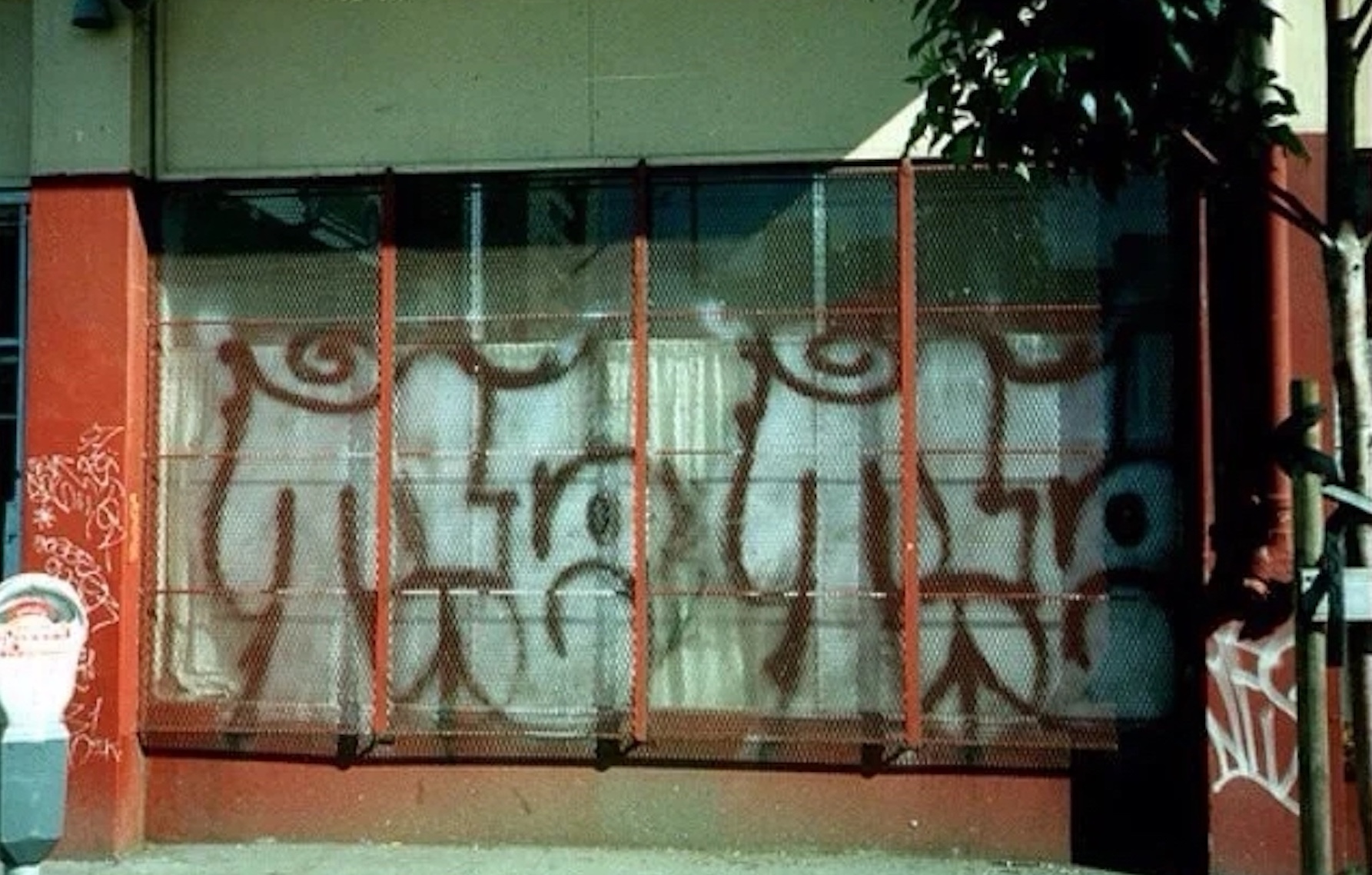
TIE, Untitled, mid-1990s, graffiti, Mission Street, San Francisco. Photographer unknown
This text was submitted as a proposal to the apexart NYC26 Open Call
In 1998, eighteen-year-old Jonathan See Lim, known as "Tie One", was shot and killed in San Francisco's Tenderloin district. A prolific graffiti artist, Lim was painting on the side of a building and pleaded for his life to his killer, a resident who claimed self-defense. Though no hate crime charges were filed, many in the Asian American and art communities understood the killing through the lens of race. After his death, fellow graffiti writers created massive tribute murals called "Tie Tributes" across the Bay Area insisting on his continued presence. In graffiti culture, a tribute honors artists by refusing to let their memory fade, by putting their name back into circulation, by declaring they still matter in the world.
TRIBUTE borrows this framework to spotlight Asian American artists who helped build American DIY, punk, and street culture--figures who remain largely invisible in these movements' histories. When we think of punk, zines, riot grrrl, or graffiti, Asian Americans rarely appear in the narrative. This exhibition corrects that erasure.
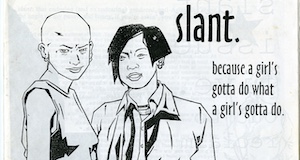
The exhibition emphasizes how independent publishing, DIY making, punk bands, and online communities weren't just cultural products but essential infrastructure. Zines like Slant and Bamboo Girl created space for Asian American voices within riot grrrl. Publications like Yolk and Giant Robot built pan-ethnic community before social media existed. Punk bands became sites where immigrant kids could claim American youth culture on their own terms. Early internet forums allowed geographically scattered Asian Americans to forge collective identity. This was the "AZN Pride" movement of the late 1990s and early 2000s: DIY identity-making built from the ground up.
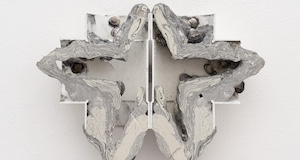
TRIBUTE features five artists who emerged from these networks and continue using these methods today in their mid-career fine arts practices. One came up through riot grrrl, playing in an all-Asian American teenage punk band before developing a sculpture practice examining consumer culture and waste--maintaining punk's DIY ethos in gallery contexts. Another documents suburban Asian American adolescence through low-fi video diaries, zines, and collaged ephemera using the same grassroots archival tools that built the movement. A third creates installations with security gates and technological detritus, continuous with street culture's material inventiveness. The exhibition also includes a writer and cultural critic whose essays excavate forgotten subcultures, continuing the archival work that zines pioneered. Finally, a zine-maker and theorist whose publications challenged riot grrrl's racial blind spots from inside the movement.
The exhibition presents sculpture and installation alongside the zines and publications that are inseparable from understanding these practices. Live performances and readings will be a part of public programming that activates the space. These performances honor the movement's roots in punk shows, zine release parties, and DIY venues where art, music, and writing converged.
Like the tribute murals painted after Tie One's death, TRIBUTE refuses erasure. It says: Asian Americans were always central to these movements. It keeps that presence alive, insists they still matter.
In 1998, eighteen-year-old Jonathan See Lim, known as "Tie One", was shot and killed in San Francisco's Tenderloin district. A prolific graffiti artist, Lim was painting on the side of a building and pleaded for his life to his killer, a resident who claimed self-defense. Though no hate crime charges were filed, many in the Asian American and art communities understood the killing through the lens of race. After his death, fellow graffiti writers created massive tribute murals called "Tie Tributes" across the Bay Area insisting on his continued presence. In graffiti culture, a tribute honors artists by refusing to let their memory fade, by putting their name back into circulation, by declaring they still matter in the world.
TRIBUTE borrows this framework to spotlight Asian American artists who helped build American DIY, punk, and street culture--figures who remain largely invisible in these movements' histories. When we think of punk, zines, riot grrrl, or graffiti, Asian Americans rarely appear in the narrative. This exhibition corrects that erasure.
The exhibition emphasizes how independent publishing, DIY making, punk bands, and online communities weren't just cultural products but essential infrastructure. Zines like Slant and Bamboo Girl created space for Asian American voices within riot grrrl. Publications like Yolk and Giant Robot built pan-ethnic community before social media existed. Punk bands became sites where immigrant kids could claim American youth culture on their own terms. Early internet forums allowed geographically scattered Asian Americans to forge collective identity. This was the "AZN Pride" movement of the late 1990s and early 2000s: DIY identity-making built from the ground up.
TRIBUTE features five artists who emerged from these networks and continue using these methods today in their mid-career fine arts practices. One came up through riot grrrl, playing in an all-Asian American teenage punk band before developing a sculpture practice examining consumer culture and waste--maintaining punk's DIY ethos in gallery contexts. Another documents suburban Asian American adolescence through low-fi video diaries, zines, and collaged ephemera using the same grassroots archival tools that built the movement. A third creates installations with security gates and technological detritus, continuous with street culture's material inventiveness. The exhibition also includes a writer and cultural critic whose essays excavate forgotten subcultures, continuing the archival work that zines pioneered. Finally, a zine-maker and theorist whose publications challenged riot grrrl's racial blind spots from inside the movement.
The exhibition presents sculpture and installation alongside the zines and publications that are inseparable from understanding these practices. Live performances and readings will be a part of public programming that activates the space. These performances honor the movement's roots in punk shows, zine release parties, and DIY venues where art, music, and writing converged.
Like the tribute murals painted after Tie One's death, TRIBUTE refuses erasure. It says: Asian Americans were always central to these movements. It keeps that presence alive, insists they still matter.
Anh Dao Ha is a curator and cultural worker based between New York City and Saigon. She is an MA candidate in Curatorial Studies at the Center for Curatorial Studies, Bard College (CCS Bard).