On 27th of June 2023, Nigerian government carry bulldozer enter Mosafejo, one slum community for Oworonshoki, Lagos, scatter people house and chase over 12,000 people commot overnight. Families wake up hear iron dey tear block, as dem don level their ancestral homes without any warning, notice, or compensation. This kain violence no be only this one time; na part of long history of land grabbing and dispossession wey don dey happen for different parts of the world for many years. From Israel to Palestine, India to Pakistan, Russia to Ukraine, and plenty African countries, government and big companies don dey collect land from vulnerable communities, push dem enter suffering, trauma, waka-waka life, and daily survival.
Na inside this background The Other Order exhibition take come out. Dem curate am as one multi-sensory space for mourning, resistance, and remembrance. The exhibition bring together works from five artists wey dey work with sound, photography, performance, video, and installation. Each artist respond to displacement and land seizure, while still create space for healing and imagining better systems of justice and belonging. The exhibition no just dey show eviction story; e dey humanize am, join personal and community stories together, so e no go just turn to numbers and statistics. Through art, The Other Order dey insist say dignity still dey for people wey dem silence, and say their struggle connect to global history of dispossession.
Obiajulu Ozegbe, Kiss from a Booze, 2025, Installation
For the center of this curatorial vision na Obiajulu Ozegbe installation Kiss from a Booze, one original work wey anchor the exhibition with strong symbolism of destruction and so-called progress. Alongside works by Bankole Damilola, Noah Okwudini, Prince Charles Uhunoma, and Edmund Boateng Akrofi, Ozegbe work set the emotional and conceptual tone for the exhibition. Together, the artworks show how dispossessed communities dey resist through storytelling, ritual, and memory, refusing make displacement be the end of their story.
Obiajulu Ozegbe installation Kiss from a Booze na strong meditation on the machine of displacement. For am, bulldozer be paradox: city planners dey praise am as sign of modernization and development, but communities dey fear am as sign of erasure. With just one soft press of steel blade one "kiss" whole families fit lose home, their houses scatter, their histories wipe away.
The work use materials wey dem gather from demolition sites: pieces of wood, rusty zinc, personal belongings, and 120 jerry cans arrange in a way wey call the spirit of the machines themselves. Ozegbe no treat these things as trash; e treat dem as witnesses to violence, carriers of memory, and storytellers.
The bulldozer turn from ordinary construction tool to machine of rupture, force viewers face the real cost of development when e stand on dispossession. Ozegbe dey ask: wetin we really gain when "development" cost human dignity, memory, and belonging?
Bankole Damilola, This Land Is Not For Sale, 2025, Photography
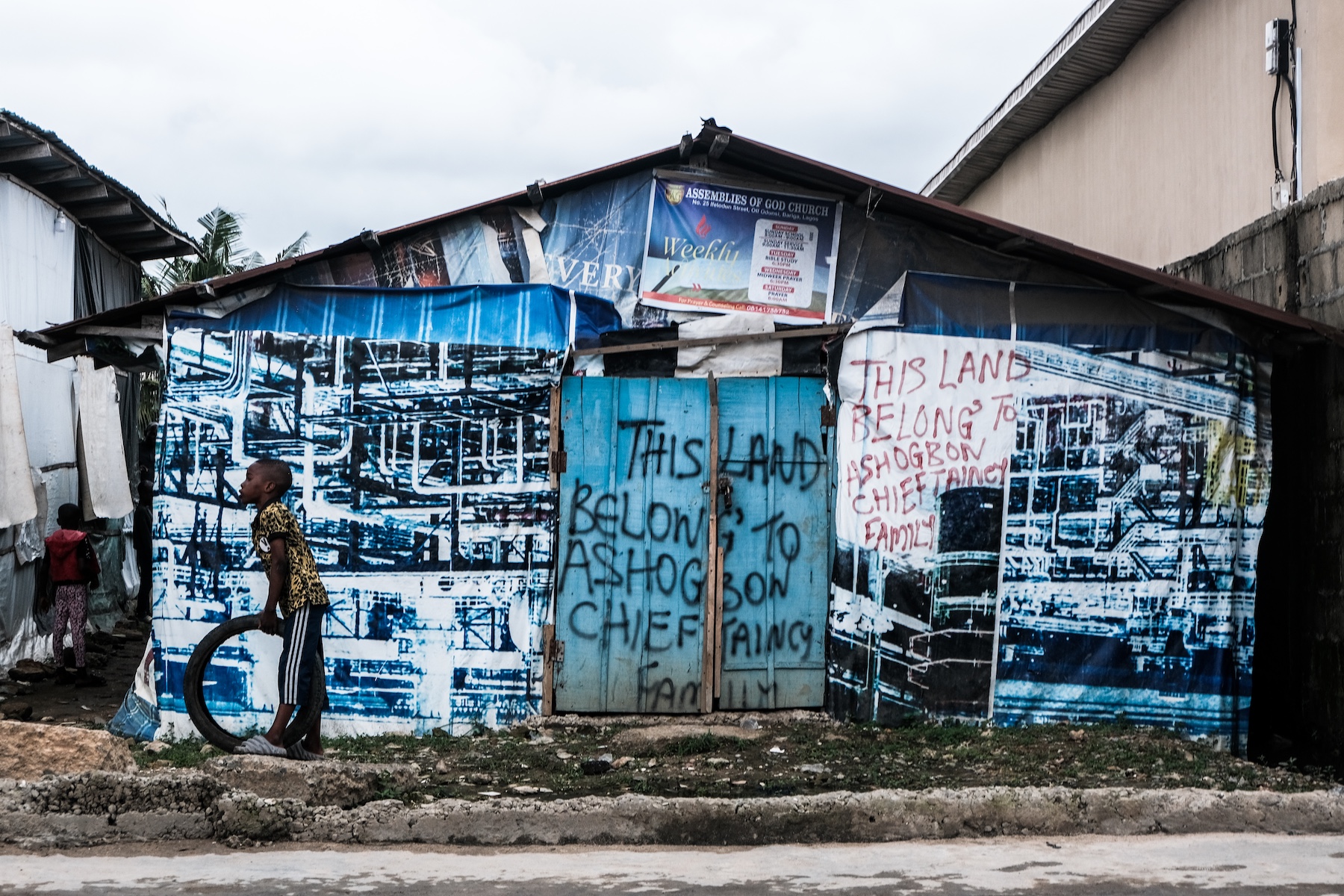
Bankole Damilola documentary photography and installation dey complement Ozegbe material testimony. Damilola na resident of Oworonshoki during the demolition. Him project This Land Is Not for Sale join strong documentary images with roofing sheets wey dem write messages like "Beware of 419" and "This House Is Not for Sale." The photographs show the raw human pain of displacement, especially how e affect women and children. The written zinc sheets show how communities dey create their own systems of resistance to claim ownership and belonging. Damilola work show say belonging no dey come from government paper or company contract, but from lived history, ancestral roots, and community bond.
Noah Okwudini, Sense of Playce, 2025, Sound and Installation
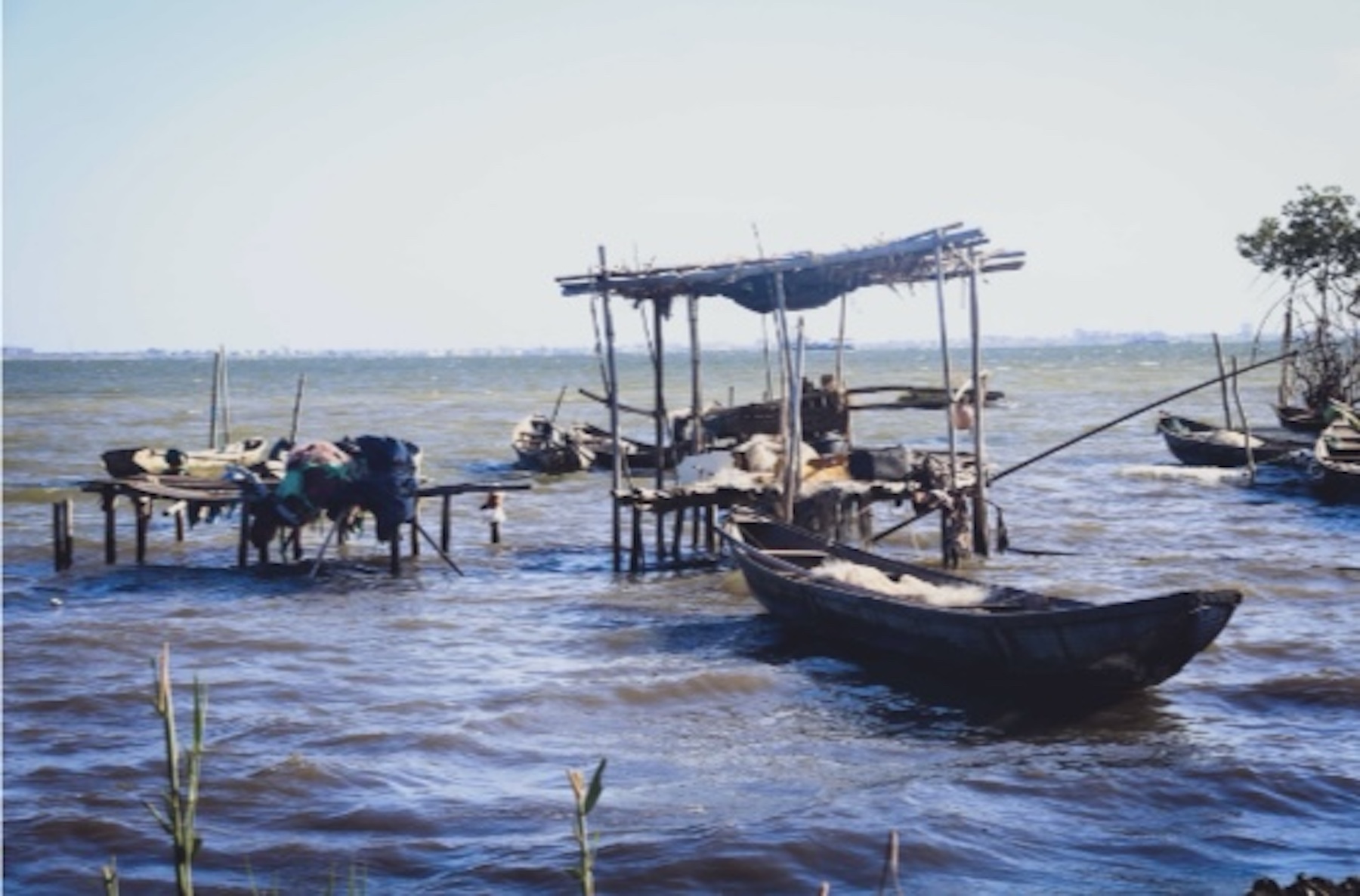
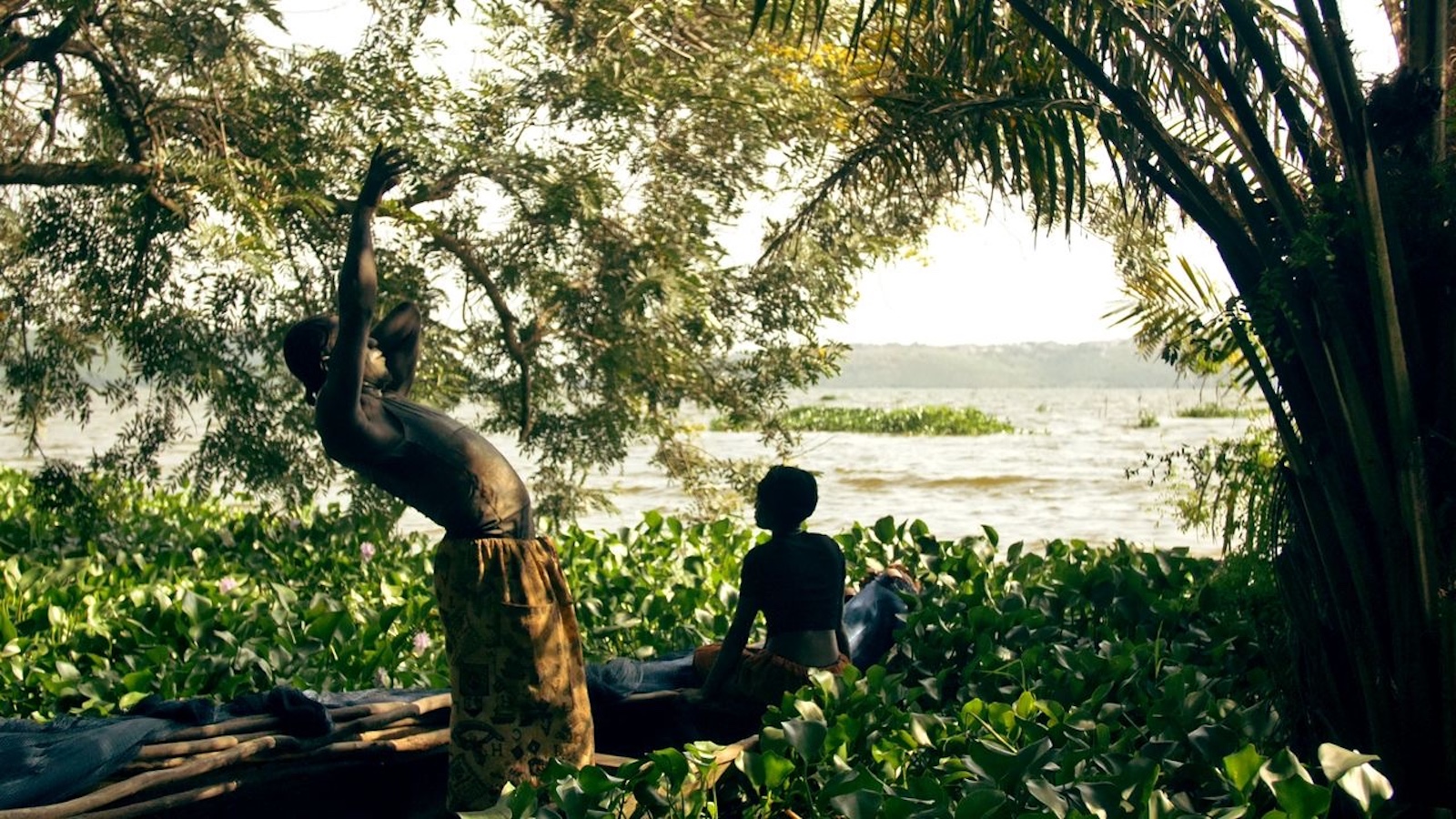
Noah Okwudini im Sense of Playce na multi-channel video, installation and sound work wey dey observe how pikin dem dey play for coastal areas for Lagos and Dar es Salaam. Di work dey unfold like scattered story, dey ask wetin happen to pikin dem memory and sense of belonging when dem comot from dia place.
Prince Charles Uhunoma, The Land in a shell, 2025, Film
E still dey invite us make we think about how we dey relate with dis coastal environments wey dey always change. Dem film am for places wey land grabbing, sand mining, and environmental change don shape. Di work dey follow moments of movement and shared play. For both cities, e dey show say land and water na connected bodies, wey dey always dey shape and reshape each oda. Inside all dis change, play turn to way to form connection, even when di ground and water wey dem stand on no sure.
Visual and sound glitches and interruptions dey further scatter space and time, dey break fixed way we dey see things.
Di work mix real-life moments with acted scenes wey be acts of play on dia own. Dis layering dey reflect how di coastal spaces and experiences wey dem show dey broken and temporary.
Sense of Playce dey stay with moments of play as dem dey happen, where bodies, land, and water dey move together, dey hold memories wey maybe no get stable ground to stay again
Edmund Akrofi Boateng, Beyond Trust Dirt, 2025 Film and Performance
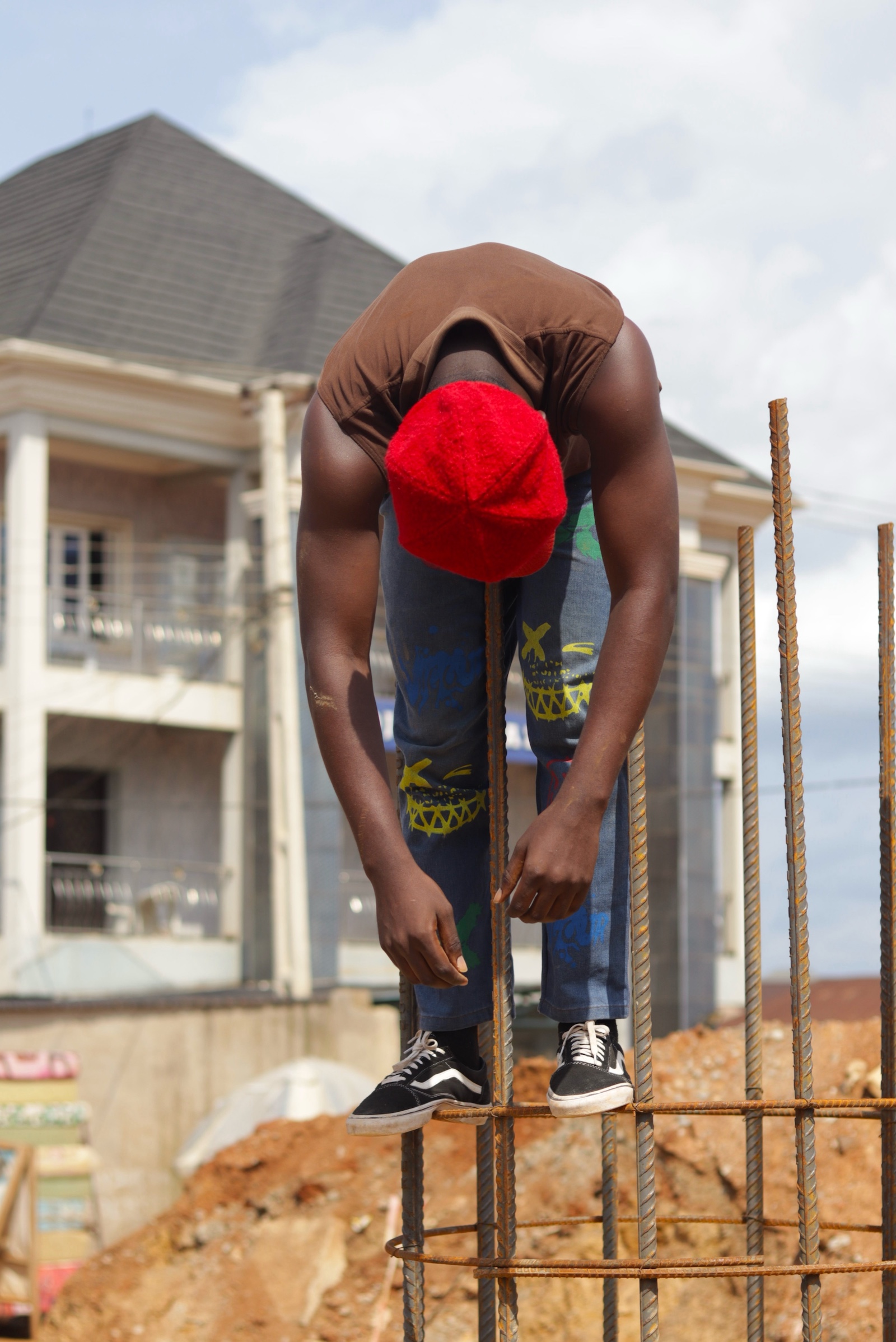
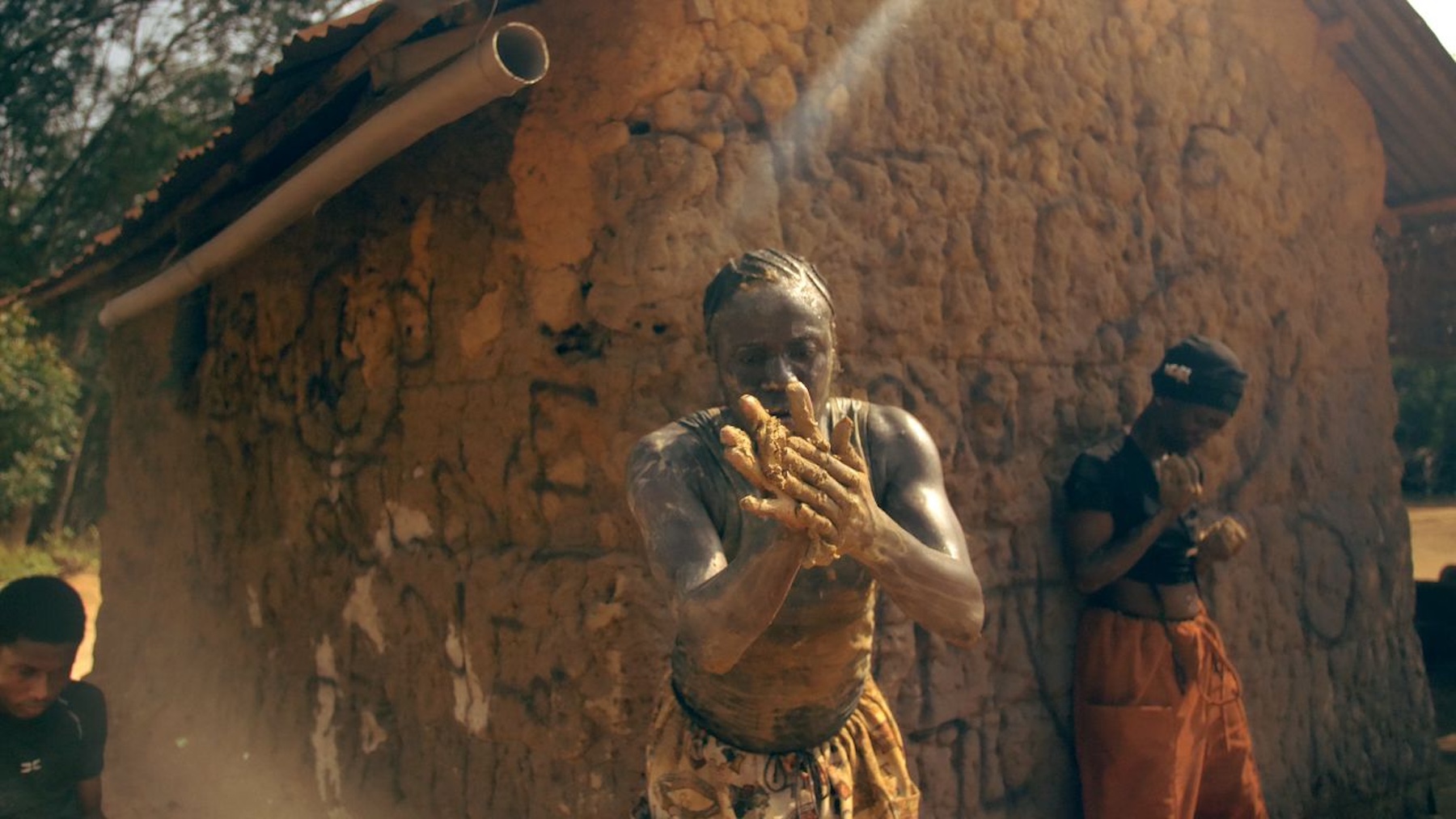
Edmund Boateng Akrofi film and performance Beyond Trust Dirt carry the conversation go wider African context. From Ghanaian history, the work show how colonial and postcolonial land policies break communal ownership, cut spiritual connection to land, and turn ancestral trust to commodity. Through body movement, Akrofi ask wetin remain inside body when land no just taken physically but spiritually. Him performance show hidden systems of dispossession and insist say memory and ritual still dey survive displacement.
Together, all the works for The Other Order weave strong testimony of resistance and imagination. Ozegbe Kiss from a Booze show violence of displacement; Damilola photography show human pain; Okudini sound reclaim memory; Uhunoma myth and speculation question ownership; Akrofi performance dig spiritual wounds.
The title itself The Other Order get many meanings. E criticize how government use "order" through eviction and demolition, and at same time highlight alternative systems of justice and belonging wey communities create. The other order no be just resistance; na way to imagine future without dispossession, where memory, ritual, and solidarity build belonging.
Edmund Akrofi Boateng, Beyond Trust Dirt, 2025, Film and Performance
To conclude, The Other Order no be just exhibition; na call to conscience. E challenge people make dem see land grabbing no as abstract politics but as human suffering. Through sound, image, installation, performance, and storytelling, the artists turn statistics to real voices and memories wey no fit erase. At the heart, the exhibition insist say progress without justice na empty thing, and modernization without dignity na rupture. The Other Order call us imagine world where development support life instead of displace am, and where land no be commodity but shared home.