

This text was submitted as a proposal to the apexart INTL26 Open Call
Jeju Island's traditional folk songs are disappearing. As younger generations leave for urban centers and tourism reshapes the island's identity, the songs that once accompanied planting, harvesting, and communal labor fade into archival recordings. Yet these songs carry more than cultural heritage--they encode an understanding of Jeju's unique volcanic ecosystem, the rhythm of seasons on basalt soil, the relationship between wind and land that shaped survival on this island.
Wind, Land, and Their Song brings together three artists whose independent practices explore the intersection of endangered cultural traditions and ecological fragility through different mediums. Each artist has developed their own approach to these urgent questions, and together their works create a dialogue about how communities preserve what is disappearing.
A sound artist working with Korean traditional music presents a body of work drawing from archived Jeju folk song recordings. Their practice includes both preservation--presenting historical recordings in immersive listening environments--and contemporary composition that reinterprets these melodies through modern instruments. A live performance component demonstrates how these songs continue to evolve through new voices while maintaining their essential character.
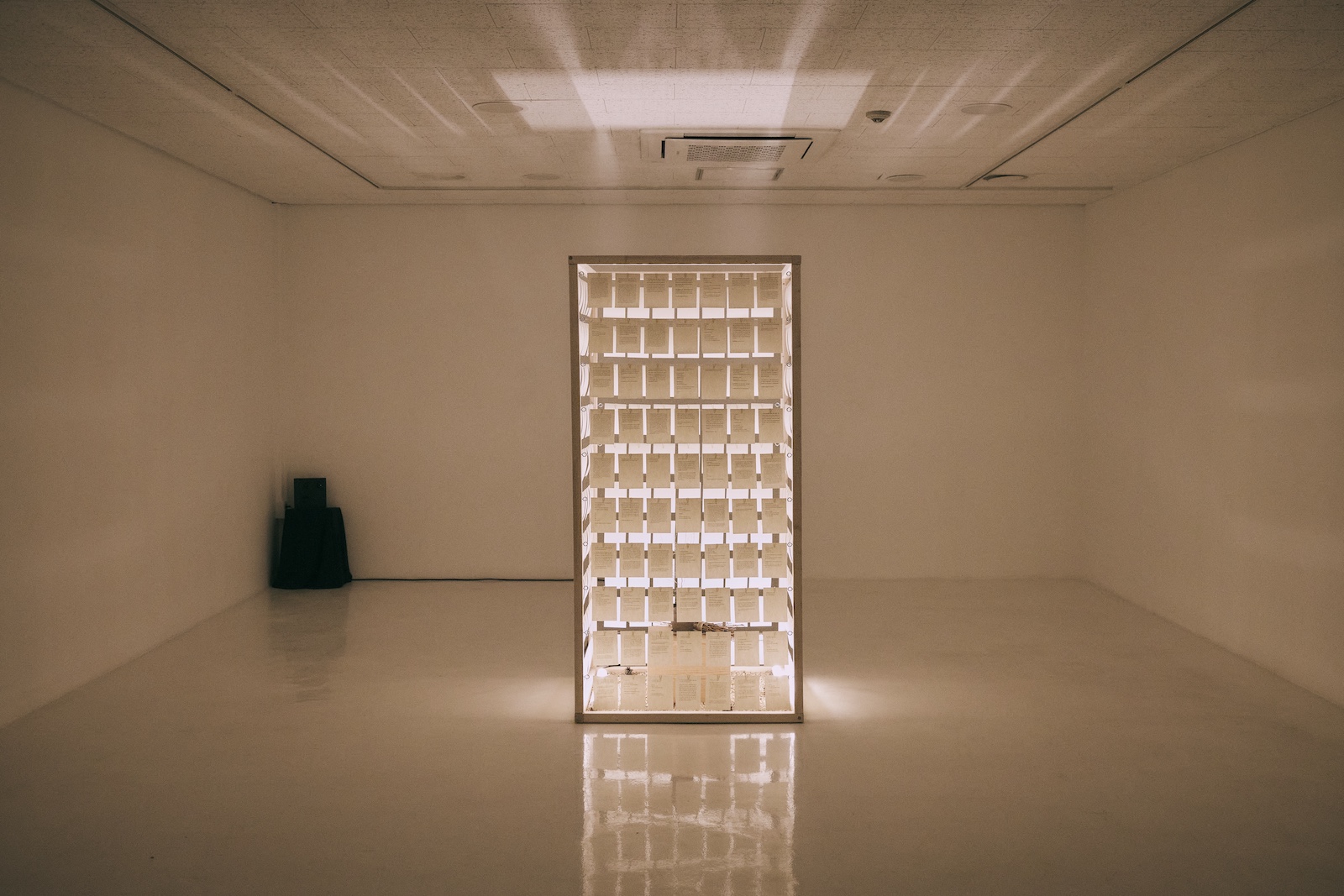
An installation artist whose practice centers on site-specific work with natural materials will create spatial compositions using elements from Jeju's volcanic landscape--black basalt rock, coastal grasses, volcanic ash. Their installations transform exhibition spaces into ecological encounters, inviting visitors to experience the raw materials that have shaped island life for generations.
A textile artist known for working with traditional Korean materials presents installations using silk thread and fabric. Their practice explores how craft traditions transform natural fibers into cultural objects, with silk threads weaving through space to suggest invisible connections across time and generations. The work embodies questions of cultural continuity and change.
While each artist works independently with their own aesthetic vision, their practices converge around shared concerns: What do we lose when traditions disappear? How do living cultures adapt without losing their essence? Can contemporary interpretation become a form of preservation?
Jeju's geographical isolation created unique folk traditions, but this same isolation now threatens their continuity. The island's UNESCO World Heritage designation recognizes its natural wonders while tourism increasingly commodifies its culture. This exhibition presents cultural and ecological heritage not as static artifacts but as living systems capable of adaptation and renewal--just as Jeju's ecosystem maintains its essential character while responding to environmental pressures.
Public programs accompanying the exhibition will invite local residents to share memories and stories connected to traditional songs, creating intergenerational dialogue. These conversations between elders who grew up with these songs and younger generations encountering them through contemporary art forms demonstrate how cultural knowledge lives through active transmission rather than archival preservation alone.
This project addresses questions facing communities worldwide: How do we honor tradition while acknowledging necessary evolution? How do we preserve cultural knowledge when original contexts no longer exist? The three artists in this exhibition offer different answers through their distinct practices, together suggesting that preservation and transformation need not be opposing forces.
Jeju Island's traditional folk songs are disappearing. As younger generations leave for urban centers and tourism reshapes the island's identity, the songs that once accompanied planting, harvesting, and communal labor fade into archival recordings. Yet these songs carry more than cultural heritage--they encode an understanding of Jeju's unique volcanic ecosystem, the rhythm of seasons on basalt soil, the relationship between wind and land that shaped survival on this island.
Wind, Land, and Their Song brings together three artists whose independent practices explore the intersection of endangered cultural traditions and ecological fragility through different mediums. Each artist has developed their own approach to these urgent questions, and together their works create a dialogue about how communities preserve what is disappearing.
A sound artist working with Korean traditional music presents a body of work drawing from archived Jeju folk song recordings. Their practice includes both preservation--presenting historical recordings in immersive listening environments--and contemporary composition that reinterprets these melodies through modern instruments. A live performance component demonstrates how these songs continue to evolve through new voices while maintaining their essential character.
An installation artist whose practice centers on site-specific work with natural materials will create spatial compositions using elements from Jeju's volcanic landscape--black basalt rock, coastal grasses, volcanic ash. Their installations transform exhibition spaces into ecological encounters, inviting visitors to experience the raw materials that have shaped island life for generations.
A textile artist known for working with traditional Korean materials presents installations using silk thread and fabric. Their practice explores how craft traditions transform natural fibers into cultural objects, with silk threads weaving through space to suggest invisible connections across time and generations. The work embodies questions of cultural continuity and change.
While each artist works independently with their own aesthetic vision, their practices converge around shared concerns: What do we lose when traditions disappear? How do living cultures adapt without losing their essence? Can contemporary interpretation become a form of preservation?
Jeju's geographical isolation created unique folk traditions, but this same isolation now threatens their continuity. The island's UNESCO World Heritage designation recognizes its natural wonders while tourism increasingly commodifies its culture. This exhibition presents cultural and ecological heritage not as static artifacts but as living systems capable of adaptation and renewal--just as Jeju's ecosystem maintains its essential character while responding to environmental pressures.
Public programs accompanying the exhibition will invite local residents to share memories and stories connected to traditional songs, creating intergenerational dialogue. These conversations between elders who grew up with these songs and younger generations encountering them through contemporary art forms demonstrate how cultural knowledge lives through active transmission rather than archival preservation alone.
This project addresses questions facing communities worldwide: How do we honor tradition while acknowledging necessary evolution? How do we preserve cultural knowledge when original contexts no longer exist? The three artists in this exhibition offer different answers through their distinct practices, together suggesting that preservation and transformation need not be opposing forces.
Gray by Silver is a Seoul-based contemporary music ensemble founded in 2016, consisting of piano, vocals, daegeum (Korean traditional woodwind), and drums. Since their founding, they have created original music blending contemporary art music, jazz, and ethnic music traditions. They received the Best Global Contemporary Album at the 23rd Korean Music Awards in 2026 for their third album
apexart’s program supporters past and present include the National Endowment for the Arts, Milton and Sally Avery Arts Foundation, the Kettering Family Foundation, the Buhl Foundation, The Martin and Rebecca Eisenberg Foundation, Bloomberg Philanthropies, Spencer Brownstone, the Kenneth A. Cowin Foundation, Epstein Teicher Philanthropies, The Greenwich Collection Ltd., William Talbott Hillman Foundation/Affirmation Arts Fund, the Fifth Floor Foundation, The Puffin Foundation, the Trust for Mutual Understanding, The Andy Warhol Foundation for the Visual Arts, and public funds from the New York City Department of Cultural Affairs in partnership with the City Council, public funds from Creative Engagement, supported by the New York State Council on the Arts with the support of the Governor and administered by LMCC, funds from NYSCA Electronic Media/Film in Partnership with Wave Farm: Media Arts Assistance Fund, with the support of the Office of the Governor and the New York State Legislature, as well as the New York State Council on the Arts with the support of Governor Kathy Hochul and the New York State Legislature.