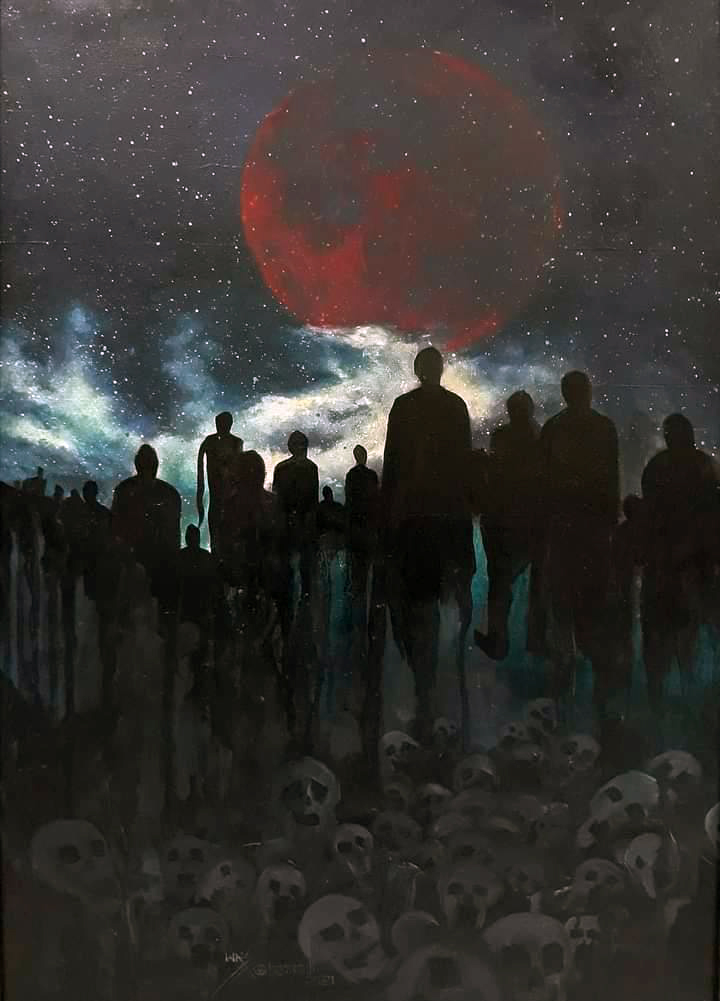
After the Taliban’s takeover of Afghanistan on August 15, 2021, artists were immediately stripped of their space and freedom to create, facing an abrupt and harsh new reality. Under Taliban rule, censorship and suppression of artistic expression have become the new reality. Severe restrictions on music and performing arts, destruction of cultural heritage, and threats to artists’ safety now define daily life. Public cultural spaces have vanished, stripping artists of venues to share their work.
In this hostile environment, artistic creation has become a double-edged sword: while it offers a liberating means of expression, it also brings significant risks. Artists and their communities face heightened danger as their work and identities are exposed to public scrutiny.
In response, many artists and cultural workers have fled to places like Germany, France, and the USA, often bringing only fragments of their art with them. Many others, however, remain in Afghanistan. Despite overwhelming obstacles, Afghan artists continue to use art as a powerful form of protest. They display resilience and determination as they communicate personal and collective experiences of hope, identity, and resistance in a context where self-expression is life-threatening.
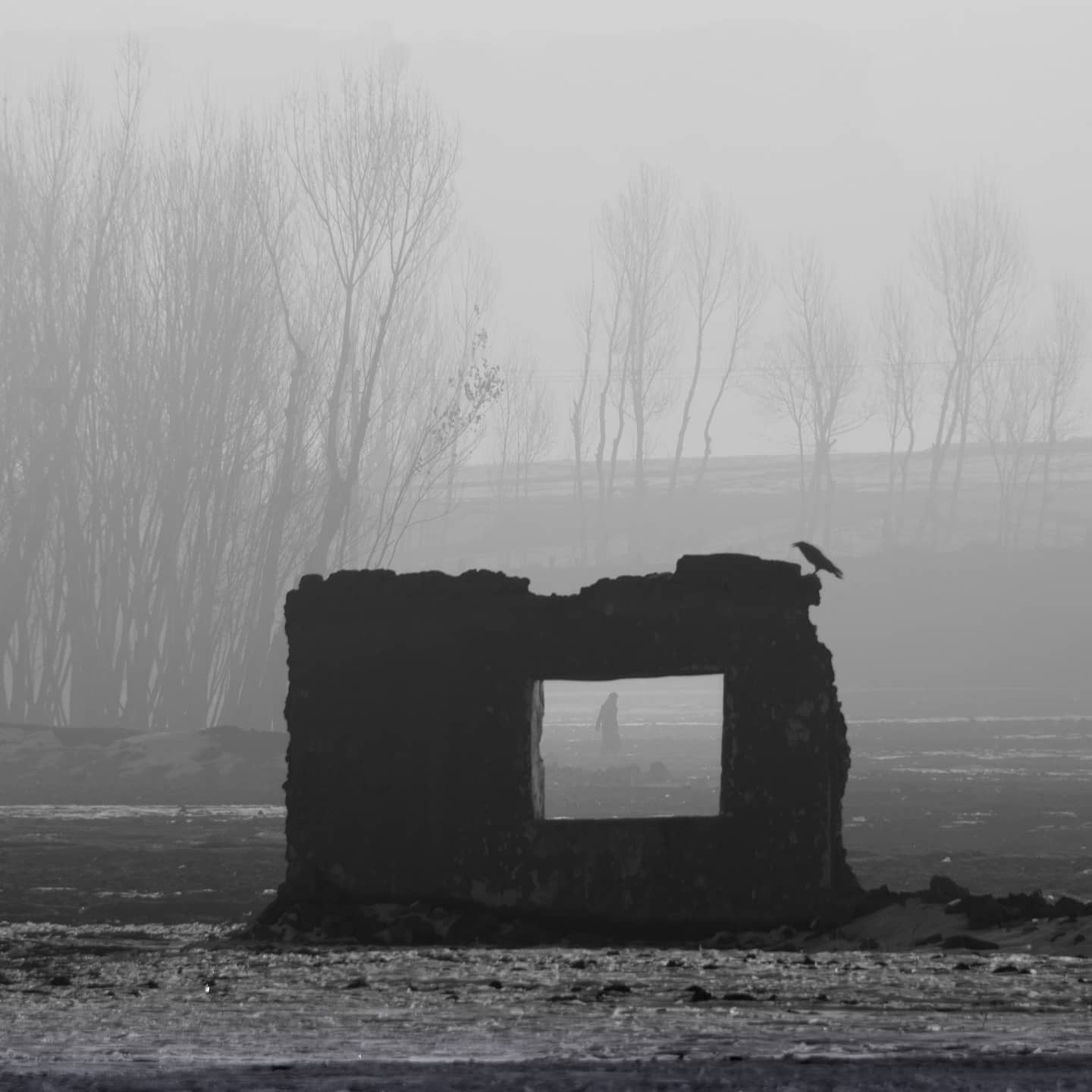
Still shot of a photo installation by 10 artists based in Afghanistan, 2015-25
For some, survival has meant destroying their own work to protect themselves and their families, fearing that the presence of such pieces could lead to severe punishment or even endanger their lives. Others lost their pieces to looting or deliberate destruction during house searches, while some works were abandoned in haste as artists fled. Yet, art endures. Some pieces remain hidden within Afghanistan, while others survive only in documentary form.
Curated by an Afghan artist, curator, and cultural worker, this exhibition presents images of pieces that were destroyed, artworks that remain in Afghanistan, art smuggled out of the country, and creations of Afghan artists in exile. It includes text, photographs, painting, videos and personal testimonies gathered during artists’ evacuations.
This exhibition is more than a showcase—it forms a vital part of an evolving archive of contemporary Afghan art. This archive testifies to the resilience of Afghan artists, preserving their creative struggle and documenting their ongoing resistance. It ensures that, even in exile or under Taliban rule, their voices will endure.
This exhibition illuminates how political upheaval has reshaped the lives of artists, exploring their survival strategies and the new realities they face. Ultimately, it celebrates resilience and hope, honoring both those who remain and those who have left Afghanistan, while building a legacy for future generations to understand the contemporary Afghan artistic landscape.
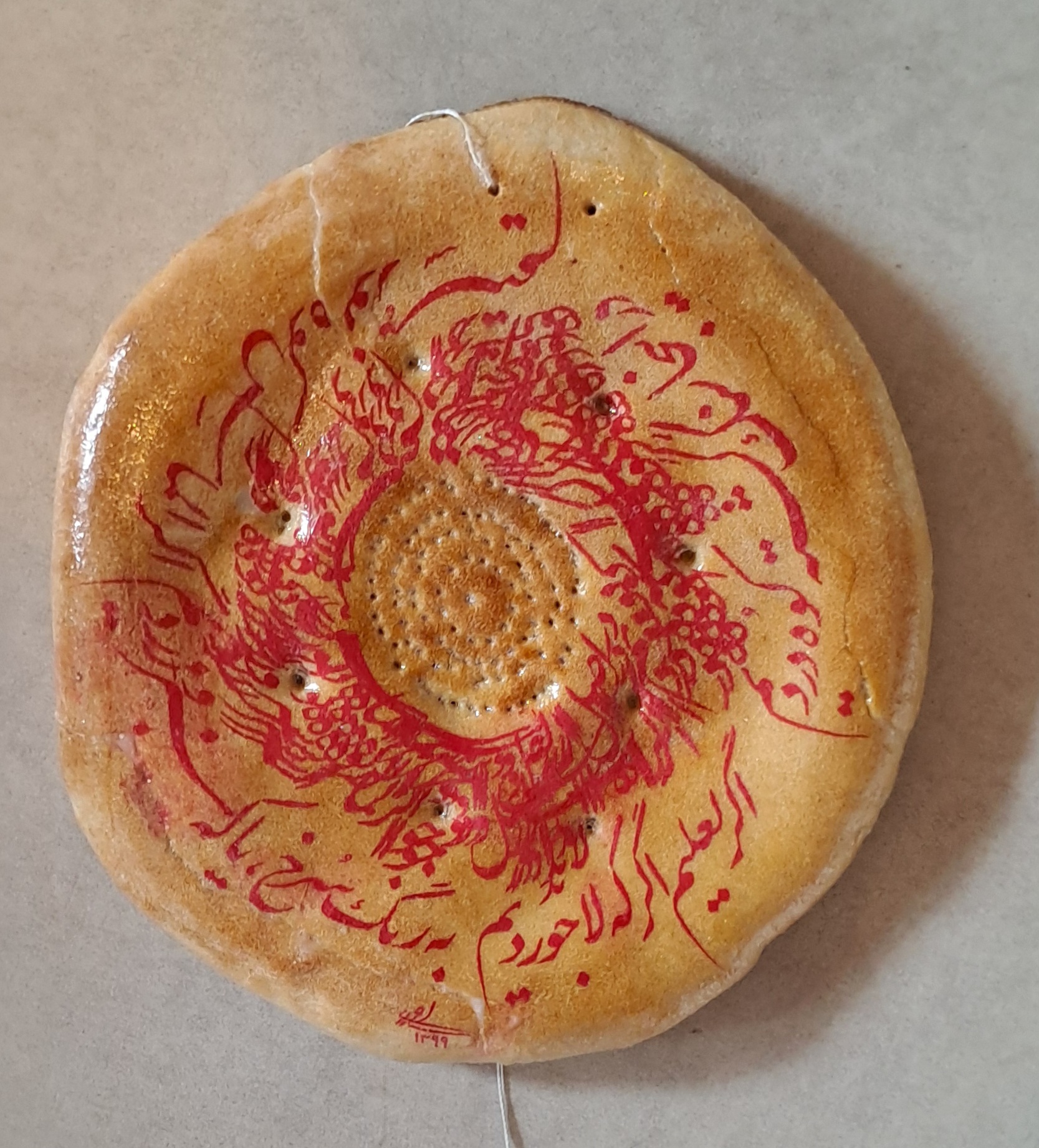
Ayatollah Ahmadi, Qors e jan, 2020, Plastic Arts – Sculpture, 5 Pieces 12” X 12” Qors E Jan, the bread sculptures by Ayatollah Ahmadi, uses preserved pieces of Afghan bread to make a powerful statement. Each bread is about the size of a dinner plate when raw. Removed from its natural setting and spirited away, it becomes more a secret than a simile. Its dry texture and faint smell reawaken memories of a life left behind, while its endurance is a form of resistance. Its solitary journey maps onto that of the artist himself, so that this piece is a symbol of both physical and cultural survival.
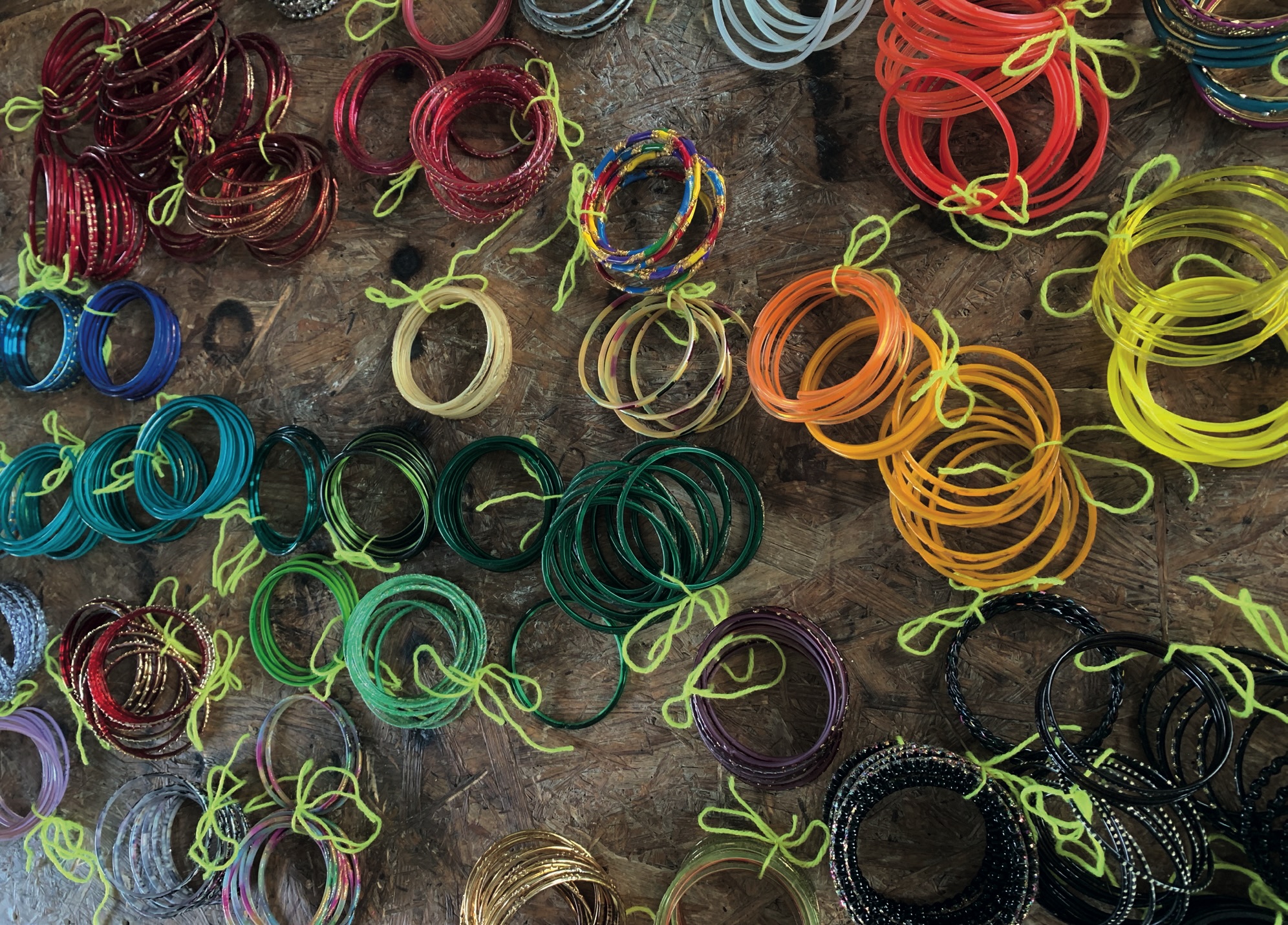
Jeanno Gaussi, THE PLACE WHERE LOST THINGS GO, 2023 - 2024, Installation + Video
Objects and transformation are central to Jeanno Gaussi’s work. In THE PLACE WHERE LOST THINGS GO, her mother’s glass bangles--symbols of family and cultural heritage—are transformed into glass bottles. This process goes beyond simply the reuse of objects; it creates new significance. The bangles, now bottles, reflect the migrant’s journey: Eastern culture is broken and remade, carrying both shared sorrow and hope. These new objects symbolize the perseverance required to remake a sense of identity and culture. In her claywork Clay Weave, Gaussi transforms the woven pattern of a carpet into ceramic. The portable and durable carpet is rendered as a delicate block of clay.
The psychological aftermath of displacement is depicted in abstract and digital-painting animations. Angela Gulistani (Kimia) created her digital animations, Hope In Darkness, while staying in Islamabad, caught between the sorrow of Afghanistan and the promise of a German visa. Her art emerges from this experience. Each frame captures the tension between despair and hope. Every day, she would often ask herself, “Will the journey continue today, or am I trapped in this uncertain state of waiting?”
Jahan Ara Rafi’s abstract self-portrait, My Story with Shamama, transforms the emotions of migration into an art of pure colors, painted shortly after arriving in the USA.
Maryam Gholam Ali’s multichannel video work, Lele, transforms a children’s game into a space for remembrance. In this work, movement is not about reaching a destination but about returning to memory. The video images and linear collages are constructed from the paths of migration and layers of lived experience—moments that, like the squares of a hopscotch grid, exist in a constant state of coming and going, caught between presence and absence, between the ground and the threshold. In this installation, the game’s form becomes a map of memory: fragmented, fluid, and continually reconstructing. Each image evokes a fragment of a suspended childhood, placing the viewer in an experience where time is non-linear and paths begin again and again
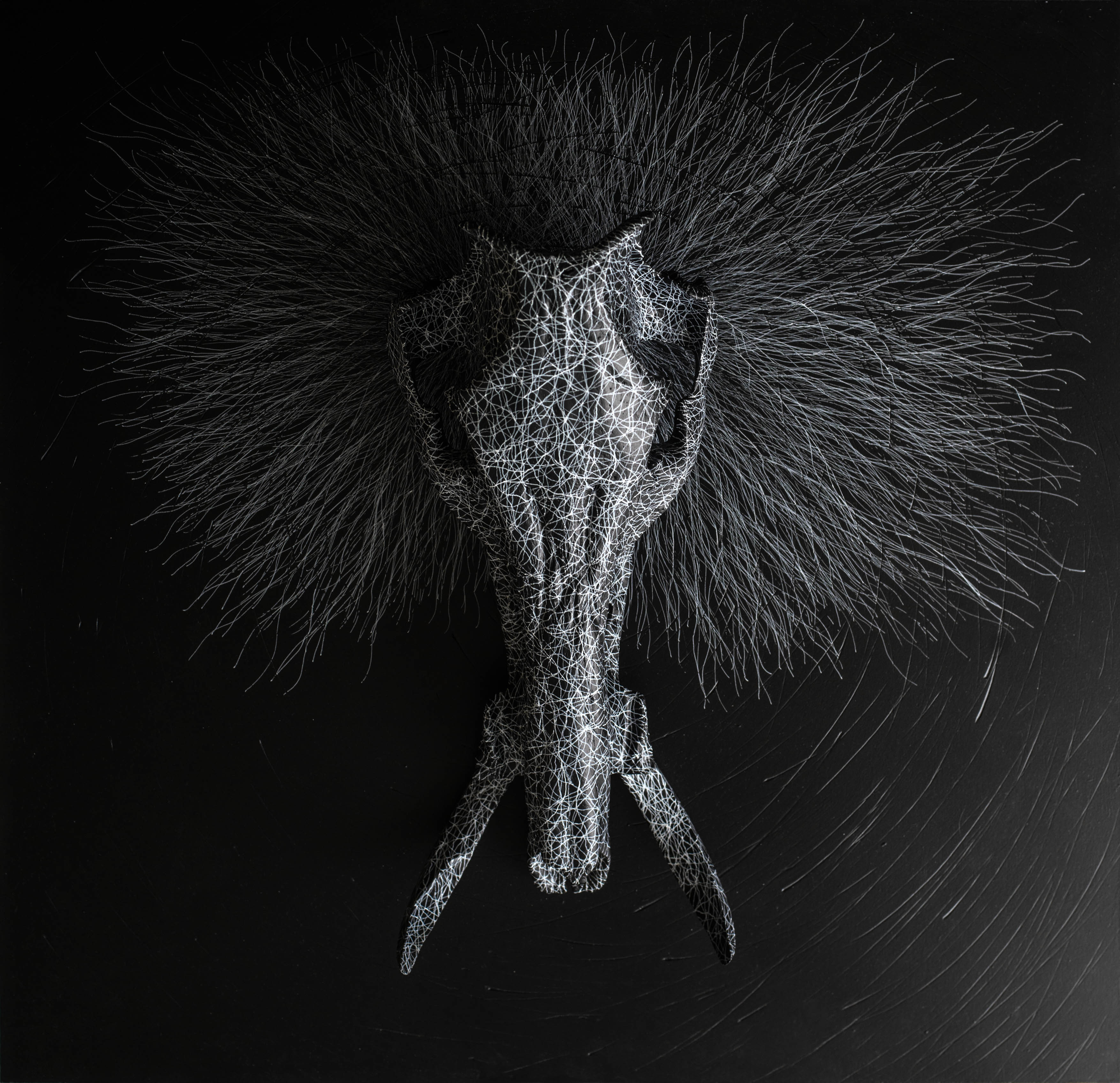
Farshad Akbari, What is your dream?, 2023, Rapid - Boar Skull - Acrylic - Scratch on wood, 24” x 24”
The threat of obliteration persists. Farshad Akbari’s series What Is Your Dream? illustrates how aspirations under censorship are at risk of extinction. Simultaneously, his mixed-media works, serving as provisional representations of these dreams, critique that very obliteration.
Waisuddin Mohammadi, Untitled, 2021, Photoprint Waisuddin Mohammadi provides a striking example: his two paintings on censorship are now lost, surviving only as photographs. This loss demonstrates just how costly suppression can be. Presenting these images becomes an act of recuperation and defiance.
Fatimah Hossaini’s photo series, Beauty Amidst the Shadows of War Made as old realities faded, it celebrates Afghan women’s diversity, strength, and beauty. Viewing these portraits now defies erasure. They keep alive a reality that is being hidden, showing what was and what endures.
One noteworthy part of this exhibition is a digital archive. It hosts pictures from artists who are still in Afghanistan and often unable to leave or create there openly. These artists take great risks in making digital copies of their own works available. These files cross national borders at great risk, proving that the tradition of creating art remains strong in harsh conditions. They reflect the courage of artists who continue to make art under oppressive conditions.